
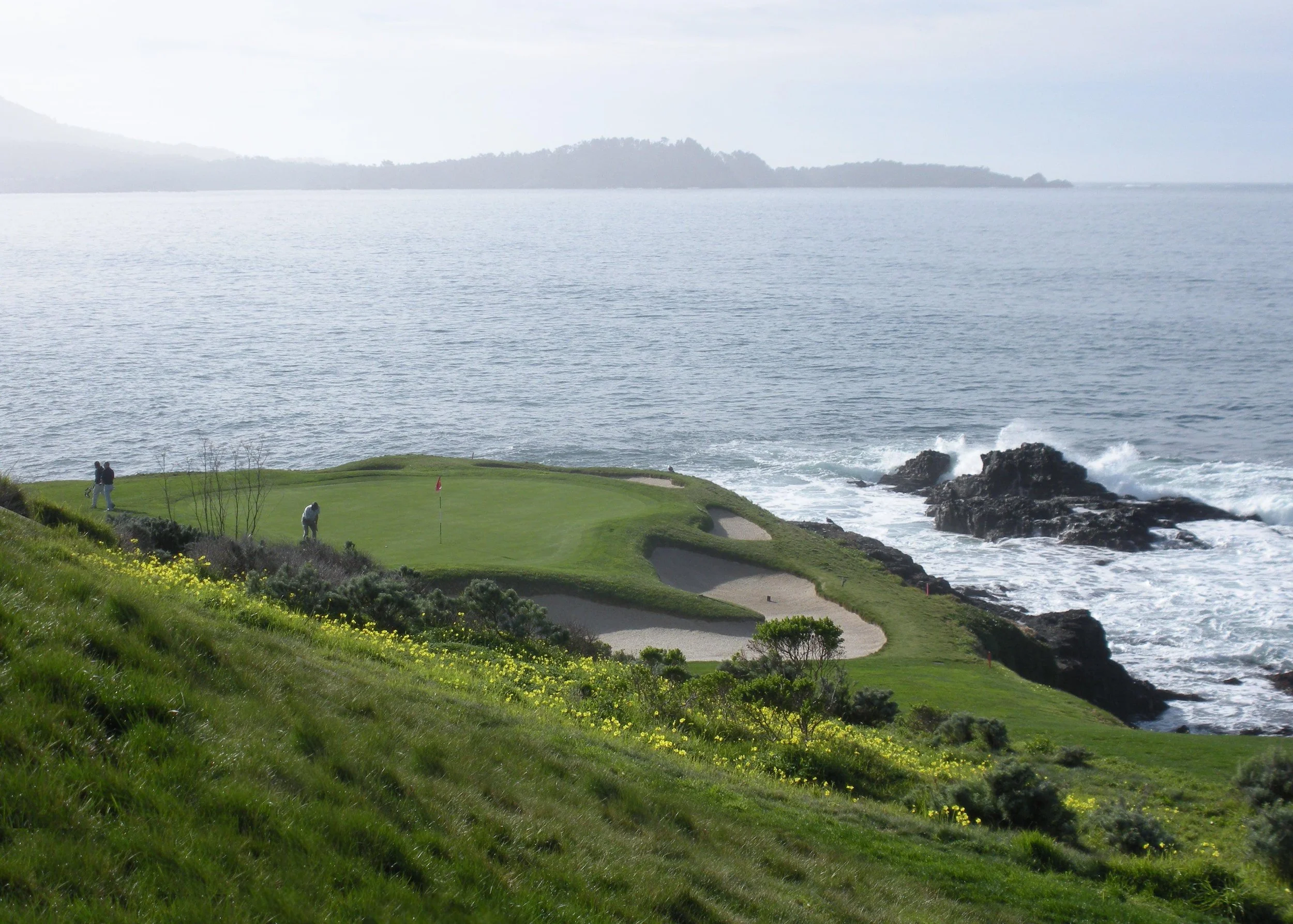
Pebble Beach: where big nature and big money intersect.
Key Points
A rapidly changing global climate, coupled with resource constraints, persistent negative public perceptions, and increased regulation are all challenges to the long-term viability of golf as we currently know it. Sustainably built and managed golf courses are, and will be, more adaptable, resilient, and publicly acceptable in the face of these pressures.
This is the first of a series of articles that will examine the elements and advantages of sustainable and accessible golf course design, construction, and maintenance.
Grounded in practical experience and training, these articles will highlight widely accepted and often quantifiable sustainable practices that can save money, enhance wildlife, and foster greater community buy-in.
Preamble
The global climate is objectively and verifiably changing. In addition, the public perception of golf is often negative, with many people perceiving it as an elitist hobby that makes large areas of open space inaccessible to most people while spoiling the environment for the leisure and benefit of a privileged few. How the golf industry reacts to the reality of a changing climate and the persistent negative public perception will determine whether they are existential threats or unique opportunities to make improvements within the golf industry. Golf facilities will either struggle to adapt or they will take the steps necessary to thrive by better co-existing with nature and within their communities.
The R&A, which is the governing body for golf worldwide (along with the USGA, which covers the United States and Mexico), has facilitated an initiative called Golf Course 2030 to consider the impacts, both positive and negative, of the changing climate, resource constraints, and government regulation on future golf course conditioning and playability. Quoting from the R&A’s 2030 Initiative website: “There are considered to be three main drivers impacting our ability to secure optimal golf course condition and playability for current and future generations; climate, resources, and regulation.” Since regulation is regionally and nationally specific, we will focus this and future articles primarily on addressing climate resilience and resource conservation and efficiency during golf course design, construction, and maintenance.
More specifically, what will follow over the next 18 installments is a step-by-step manual on how to build a new golf course, or renovate an existing one, in ways that ensure that the golf course will be resilient to the future climate and resource pressures that it is likely to face. For each step we will specifically highlight widely accepted sustainable practices as a way to counter the threats of climate change and resource scarcity.
Some of the questions that we will attempt to answer:
Which experts should be hired and why? At what point in the planning/design/construction process should they be hired and what will their responsibilities be?
An examination of the different ways of building a golf course (detailed plans being bid on and built by a general contractor (design-bid-build) versus less detailed plans being built by the designer and his or her team (design-build)) and the potential impacts of that methodology on the quality and sustainability of the project.
What are the sustainable design and construction practices with the highest return on investment (ROI), making the project more economically viable over the long-term?
What design decisions can be made to reduce the amount of raw material (soil, sand, gravel, pipe) used and moved during construction?
What steps can be taken during construction to significantly reduce the use of inputs and resources - such as water, pesticides, herbicides, fungicides, fertilizers, energy, and sand - in the long-term maintenance of the golf course?
What elements should be incorporated to enhance both the health of the turf and the biodiversity found on the golf course? How will this also save money?
How can the project secure buy-in from a greater range of stakeholders in the local community and beyond? Why is this important?
What is sustainability and why is it so important to the future of golf?
We must first clearly define what we mean by sustainability in golf course design and construction. According to the European Institute of Golf Course Architects (EIGCA):
Golf course sustainability, when applied to design, means thinking simultaneously about benefits to the environment, society, and the economy, so that we can continue to improve their positive value through future generations. In practical terms, this boils down to three key aims: to enhance nature, to conserve resources, and to provide multiple benefits for communities. (https://www.eigca.org/golf-course-sustainability)
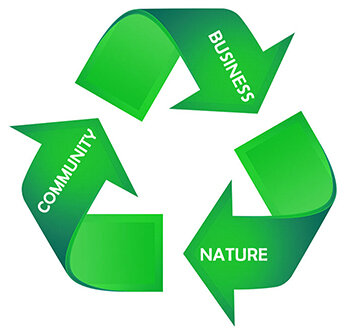
The Holy Trinity of Sustainability
According to the Golf Environment Organization (GEO) Foundation, “Bringing environmental and social considerations into the heart of your project from the start saves time and money during design, construction, and into long-term operations.”
Many, if not most, golf course superintendents are already very sustainability minded, so the last piece of the puzzle is to identify good practices and effectively communicate them, not only to the users of the golf course, but also to the outside world. When there are good practices, it will only be through the effective communication of those good practices that the negative perception of golf can abate, leading to broader public acceptance and support.
We at Sustain Golf believe that common sense sustainable design and construction practices will enrich the health of the natural landscape while also fostering broader support for the project within the local and regional community and, over the long-term, making the project more economically viable. Within this series of articles, we aim to highlight sustainable best practices that can have long-term environmental, social, and economic benefits with relatively low capital outlay.
Contact Sustain Golf for more information!
We firmly believe that common sense sustainable design, construction, and maintenance practices are the keys to the long-term outlook for the game of golf. We at Sustain Golf aspire to be on the leading edge of applying sustainability concepts to golf course design and construction.
We would be happy to answer any questions that you might have about sustainable golf course design, maintenance, and construction. Visit us at www.sustaingolf.com or contact us at the following email address for more information: matt@sustaingolf.com.
Up Next:
Step 1 – The Sustainability Benefits of Hiring a Qualified Golf Course Architect
Sustain Golf is a sustainability- and accessibility-focused golf course design company. We have the breadth and diversity of experience and knowledge to offer a full suite of golf course design, construction, and consultation services, from first concept to opening day and into operations on your new or remodeled golf course.
References:
EIGCA website. Retrieved from https://www.eigca.org/golf-course-sustainability
GEO website. Retrieved from https://sustainable.golf/
R & A Golf Course 2030 website. Retrieved from https://www.randa.org/en/what-is-gc2030
EIGCA Sustainability Programme website. Retrieved from https://eigca.org/sustainability-programme/
EIGCA Sustainable Design Register. Retrieved from https://eigca.org/eigca-sustainable-design-register/
Peer Review:
Dr. Keith Duff, former UK government wildlife agency Chief Scientist, current Golf Environment Consultant
Sam Thomas, Director of Golf Development, GEO Foundation
Agustin Pizá, ASGCA, EIGCA, MSc GCA
Cees van Nieuwenhuizen, EIGCA, MSc GCA