
Key Points
Water features often must be included in the designed landscape of a golf course due to the very practical (and/or mandated) needs for irrigation water storage and run-off detention and treatment.
All of the functions of man-made water features (storage, strategic, ecological, and aesthetic) should be given consideration by the golf course architect and each water feature should serve as many of these functions as is practical.
Cart paths may often be a “necessary evil” to minimize the damage that golf carts can cause, but wall-to-wall concrete or asphalt paths are not necessarily always the best option, economically or aesthetically. Alternatives and restraint must be considered.
It is very easy for a golf course architect to become so focused on the storage, strategic, and aesthetic functions of man-made water features that the opportunities for ecological benefits get overlooked. While calculating whether a storage lake will have enough capacity to meet the golf course’s peak irrigation demand, the golf course architect may not be thinking about the vegetated buffer that can stabilize the edge of the lake and bio-filtrate overland flow before it enters the lake. While imagining the strategic excitement that a meandering stream on the 18th hole might bring to a close match (and how the water might look from the back patio of the clubhouse), the golf course architect may not be thinking about the important biological functions that the stream might serve for fish, wading birds, amphibians, and invertebrates and how best to connect the stream to a regional blue corridor that links water features on adjacent properties.
Well-designed water features serve a number of important purposes so it’s imperative that the storage, strategic, ecological, and aesthetic functions all be given due consideration by the golf course architect and that each man-made water feature serve as many of these functions as is practical.
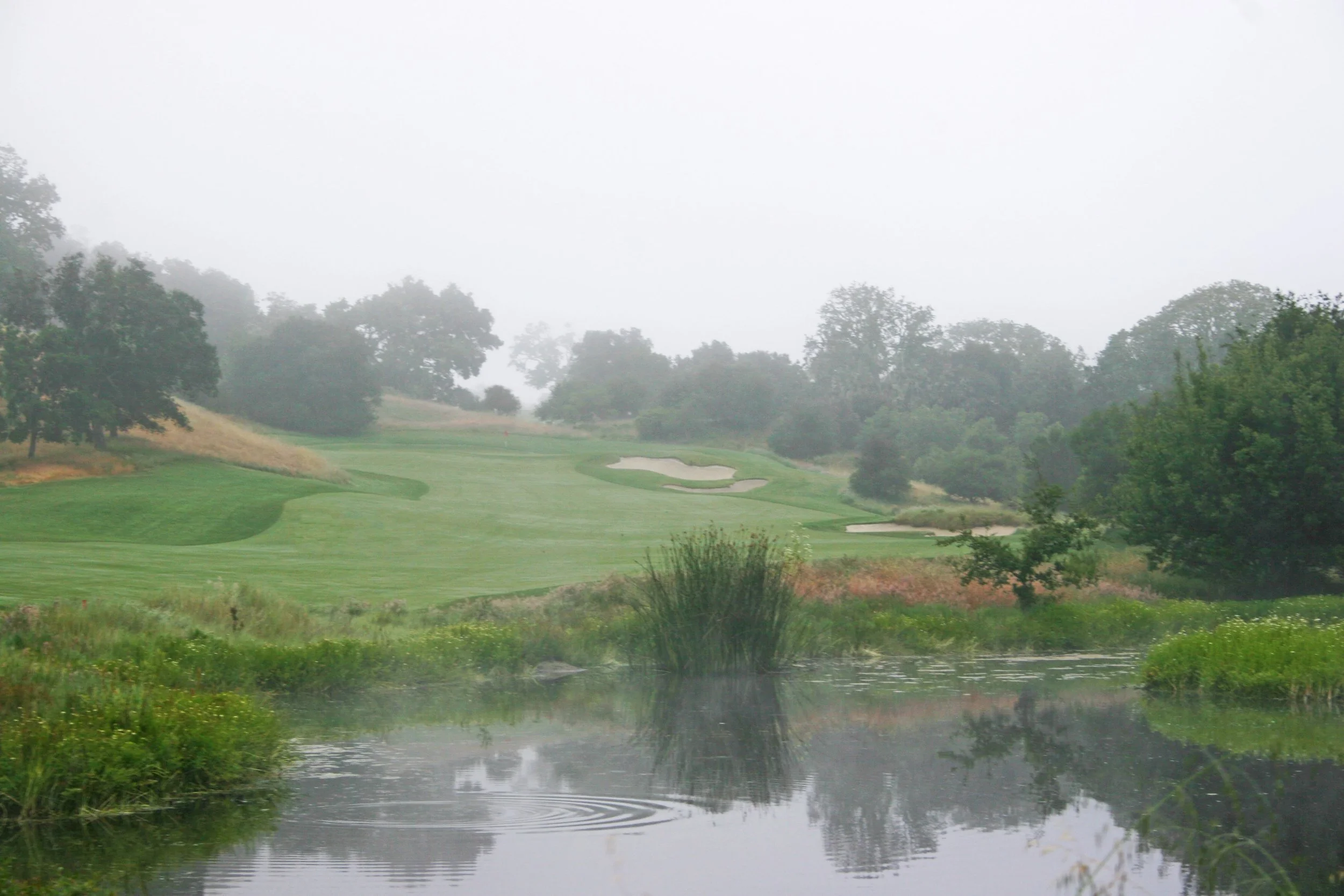
The Storage Function of Man-Made Water Features
Man-made water features are often needed on a golf course to store water for use by the irrigation system. The irrigation design consultant or civil engineer will assist the golf course architect in calculating exactly how much water will need to be stored for irrigation purposes based on the golf course design and a number of environmental factors, including, but not limited to:
Total area of irrigated turf and landscaping
Turfgrass type(s)
Watershed catchment area
How much water is available from other sources (wells, treated wastewater)
Evaporation-transpiration (ET) rates
Infiltration rates
Peak and annual rainfall
Finally, the anticipated maintenance philosophy should also be considered when calculating the required storage capacity – will the golf course be maintained to be green and lush or firm (brown) and fast? The difference between these turf conditions can be a significant volume of water.
Once the desired storage volume is calculated, it is up to the golf course architect to accommodate that volume of storage by integrating storage lakes into the designed landscape.
In addition to the volume required for peak irrigation, another consideration for the design of man-made water features is that many parts of the world are now experiencing more intense and more frequent storms due to climate change. In anticipation of this, larger buffer zones and adequate freeboard (excess volume between the normal water elevation of the lake and the top of the containing bank) should be incorporated into the designed water features. A qualified hydrologist or civil engineer can advise on whether the designed water features will satisfy all applicable storage and safety requirements.
Finally, an understanding of terminology is helpful: storage lakes are the primary source for irrigation water and can be drawn-down several feet if the rate that irrigation water is being used is greater than the refill rate (via pumping or runoff and overland flow). In contrast, balancing lakes have a relatively constant water level (maintained by pumps, balancing pipes, weirs, and overflows) and are often built more for aesthetic and/or strategic purposes – the water is to be used for irrigation only in an emergency. Below is a picture of a storage lake that has been drawn down several feet, while still functioning as a strategic hazard.
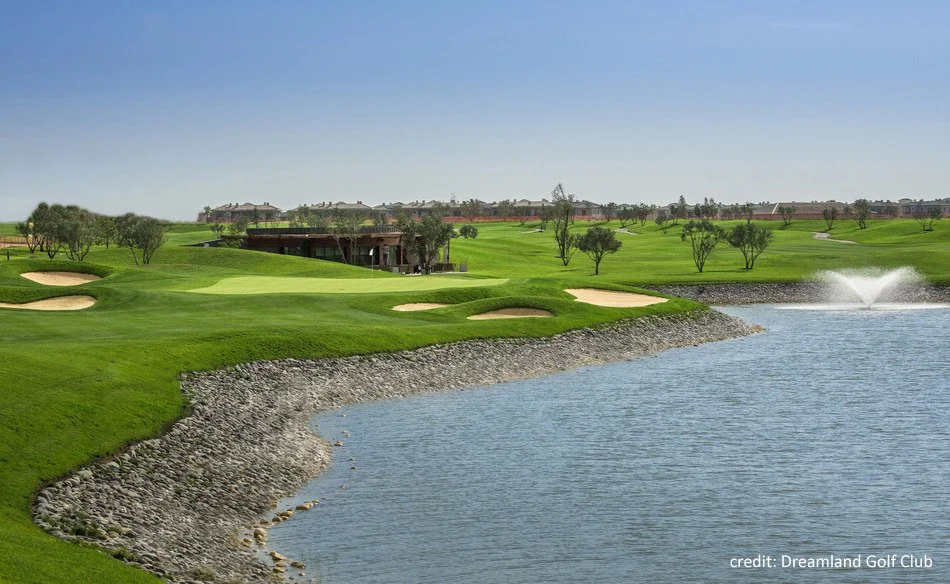
The Strategic Function of Man-Made Water Features
The North Sea and the Atlantic Ocean off the eastern and western coasts of Scotland were most likely golf’s very first water hazards. Even after golf courses started to be built away from the coast, early golf course architects were (necessarily) restricted to a site’s natural drainage patterns by a lack of large-scale earthmoving capability, letting the water move and collect largely as the land dictated and routing the golf course and conceiving each golf hole’s strategy in response to those natural processes.
Modern golf course architects have machinery which gives them the flexibility to alter naturally occurring water features, or simply build their own wherever they want, to suit their strategic ideas for a golf hole. However, the most sustainable, natural, and economic design solution will always be to follow the site’s natural drainage patterns to the greatest extent possible.
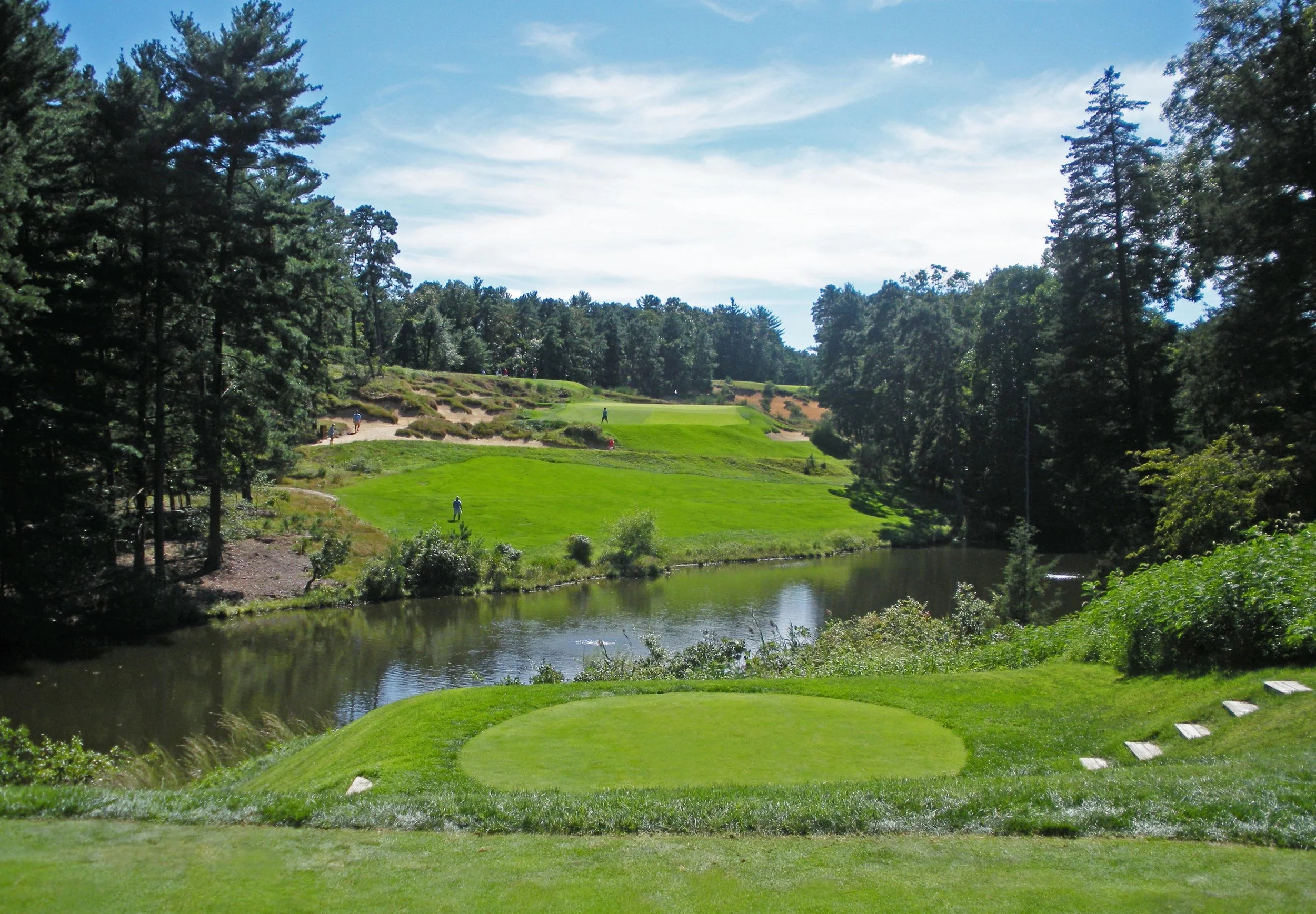
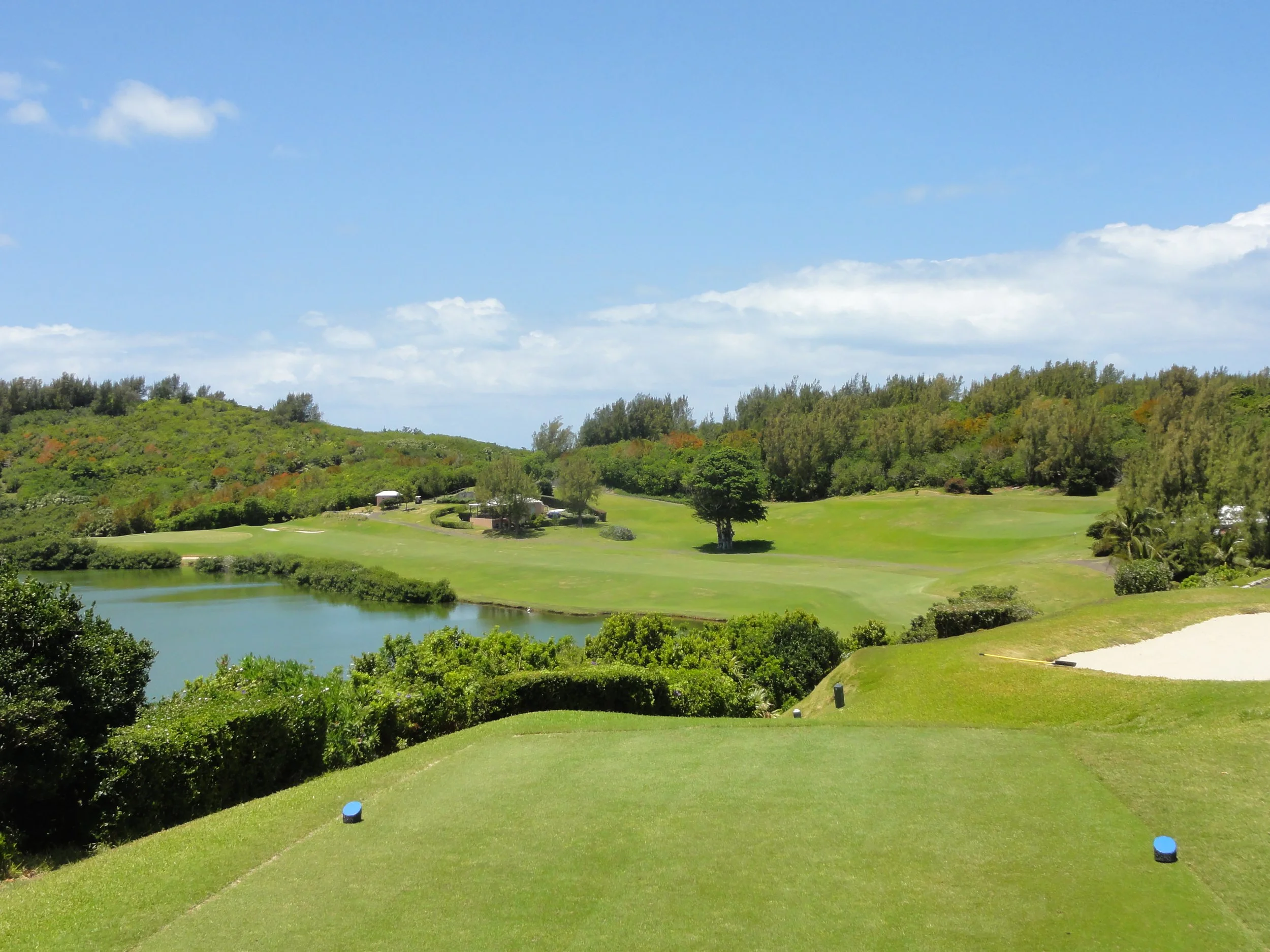
Whether the water features are natural or manufactured, golf course architects throughout history have come up with countless ways to incorporate them into the challenge of their golf holes. Penal, heroic, and strategic schools of golf design all utilize water hazards in differing ways. Below are two famous golf holes that use water features very differently (5th hole, Pine Valley Golf Club as a do-or-die penal hazard; 5th hole, Mid Ocean Club as a bite-off-as-much-as-you-can-chew strategic hazard). When strategic water features can also serve an ecological function, such as fostering biodiversity and/or bio-filtrating stormwater and irrigation run-off, all the better(note the gently sloping naturalized edges in the following pictures).
The Ecological Function of Man-Made Water Features
In many parts of the world, the use of potable groundwater or municipal water as a source for irrigation is being restricted or has become prohibitively expensive. As a result, golf course irrigation is increasingly reliant on what are often lesser-quality water sources, e.g. treated wastewater and collected surface water. These sources frequently have higher nutrient content (nitrogen, potassium, and phosphorus, typically from fertilizer), in addition to higher salt, sediment, and contaminant levels. Poor water quality can impact not only turf growth but also clog irrigation and aeration equipment and detract from golf course aesthetics (algae, odor, etc).
Therefore, one of the most important ancillary functions of man-made water features is to improve water quality to make it more suitable for irrigation and (when necessary) off-site release. The most economical and ecological methods for proactively improving water quality include:
Reducing the use of fertilizers (especially phosphorus, which encourages algal blooms) and other chemical inputs (pesticides, herbicides), especially near lake edges, to reduce the need for water treatment;
Incorporating SuDS features (such as small streams and broad shallow channels that are full of native plant life and feed into natural or constructed wetlands and marshes) upstream of the storage and balancing lakes. These features will slow the flow of runoff water, allowing more of it to percolate into the ground, where it will be naturally filtered and returned to groundwater. The water that doesn’t percolate will have chemicals and nutrients biofiltered by the native plants and will have been slowed down enough to have some of the particulate pollution settle out. SuDS features are discussed in greater detail in Step 8: Storm Drainage Design and Installation & An Overview of SuDS;
Establishing and maintaining native vegetative lake buffers that are at least 6’ (2 meters) wide (a steeper slope requires a wider buffer width) to slow and filter overland flow before it enters a lake or stream. These buffers have the additional benefit of providing habitat for fish, wading birds, amphibians, and other aquatic organisms (some of which are natural mosquito predators). Vegetated shorelines are also less erosion prone and decrease the amount of goose-friendly lakeside habitat;
Goose waste is a big source of phosphorous and goose traffic can undermine shorelines and cause bank erosion, so keeping geese away using non-lethal behavioral and harassment techniques will go a long way toward improving water quality and improving bank stability;
Designing water features so they are less favorable to the growth of weeds and algae – generally storage and balancing lakes should be 9-15’ (3-5 meters) deep to encourage circulation and prevent the kind of stratification in the water column that is harmful to a lake’s biological processes;
Types and elements of ecologically valuable water features include:
Wetlands, lagoons, and ponds with a variety of widths and depths (pools, islands, and spits) to encourage plant and animal biodiversity;
Include a shallow transitional area (littoral zone) filled with native vegetation on the perimeter of the lake for pollutant filtering, biodiversity, and erosion control;
Gradual banks (no steeper than 3:1) for easier access by (non-goose) wildlife;
Landscaped with local flora that is correctly placed based on wet tolerance, visual appeal, and playing characteristics (to reduce the incidence of lost balls when near in-play areas);
Connected to other water features both on- and off-site to create a “blue corridor” for wildlife.
Some photos of these ecological measures are below:
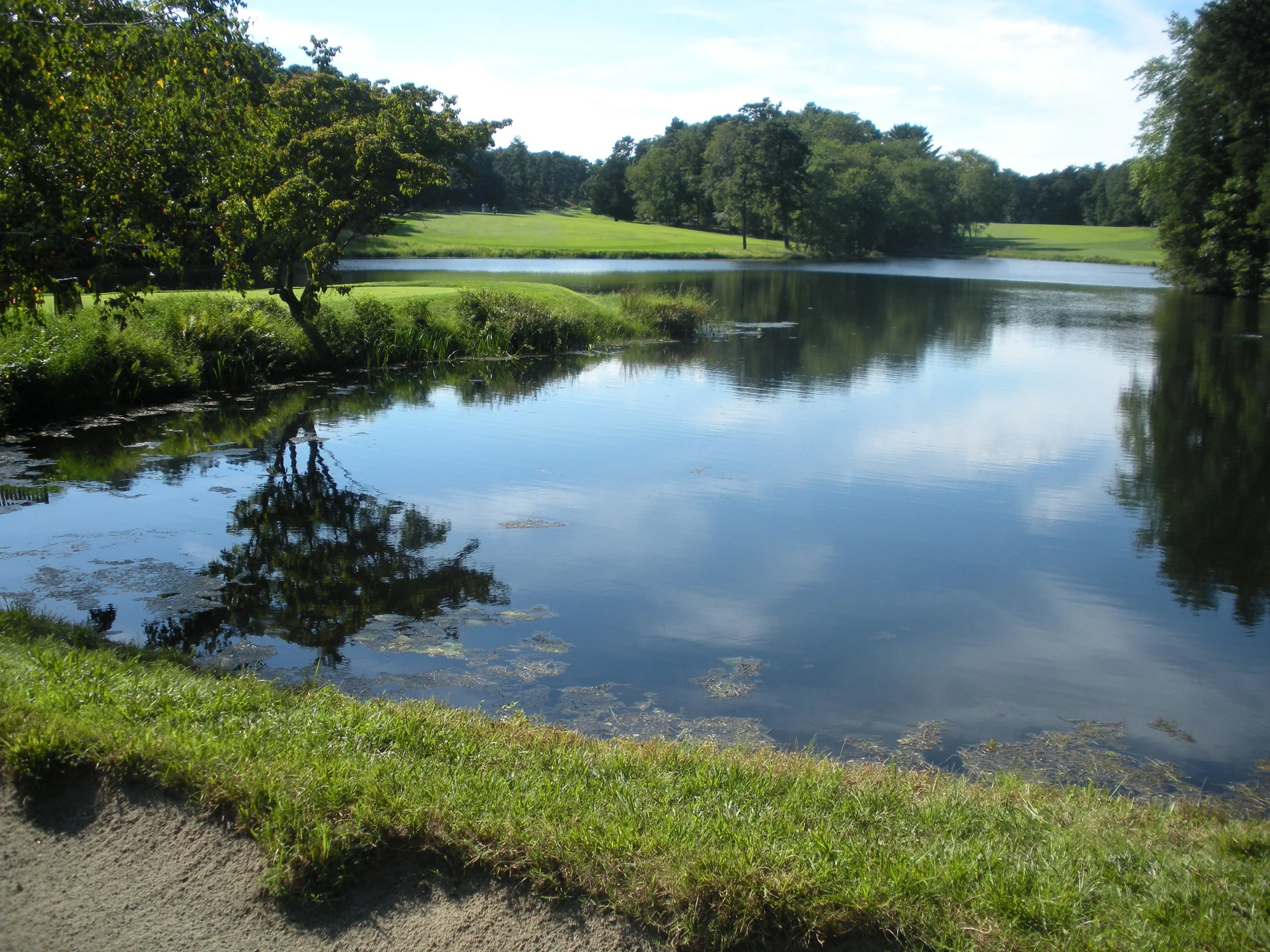
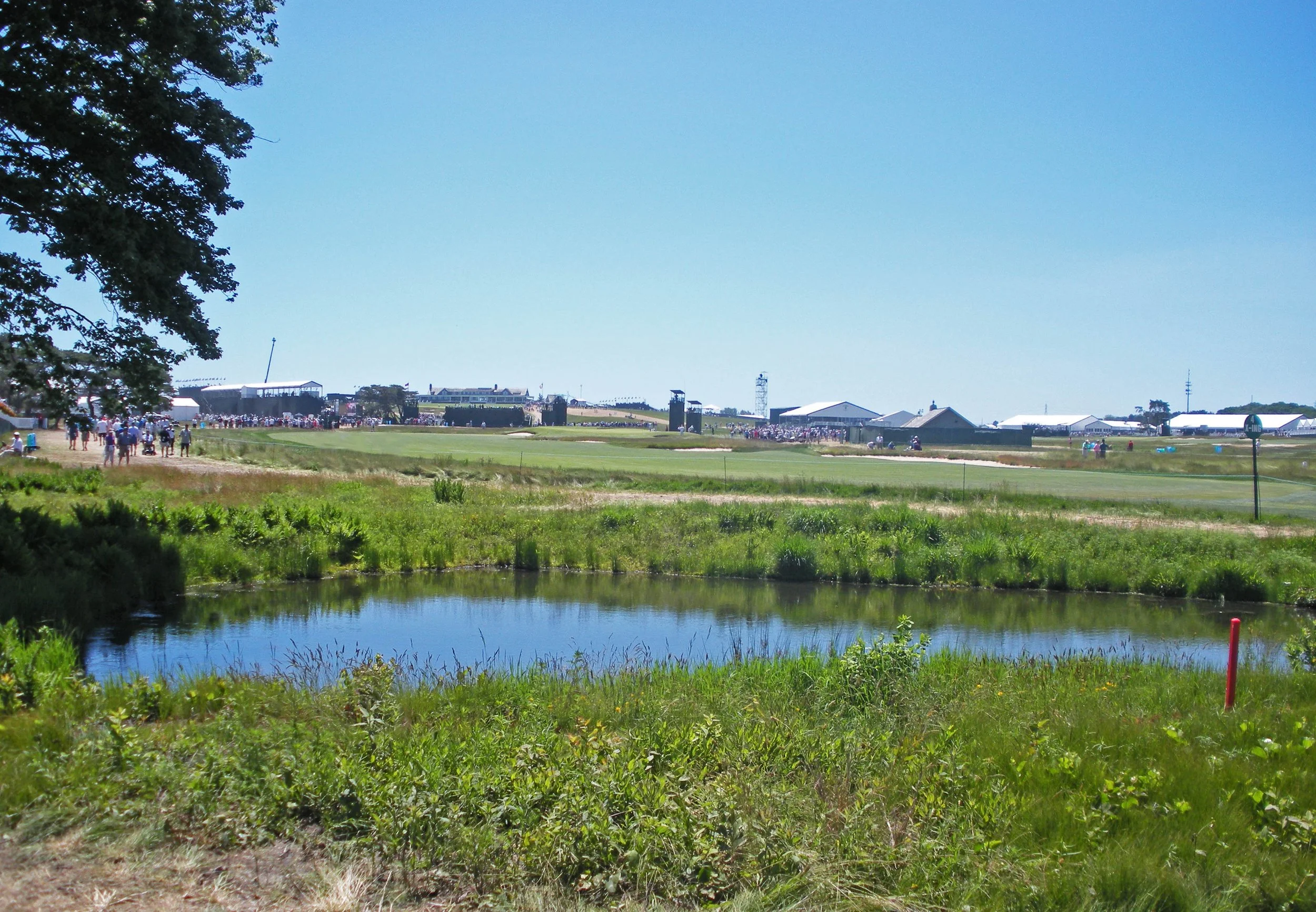
SuDS features and naturalized lake buffers at Pine Valley CC (above) and Shinnecock Hills CC (below)
All man-made water features on a golf course should also be designed to serve the important ecological function of capturing the majority of the water that falls on the site during a rainfall event and either storing it (retention) or slowing it down to allow for particulate settling and groundwater recharge before it is eventually released off-site (detention). One of the primary benefits of detaining stormwater is to offset the peak flow of a storm, which will reduce the risk of flooding, erosion, and pollution downstream. Incidentally, these are also the principal functions of a Sustainable Drainage System (SuDS).
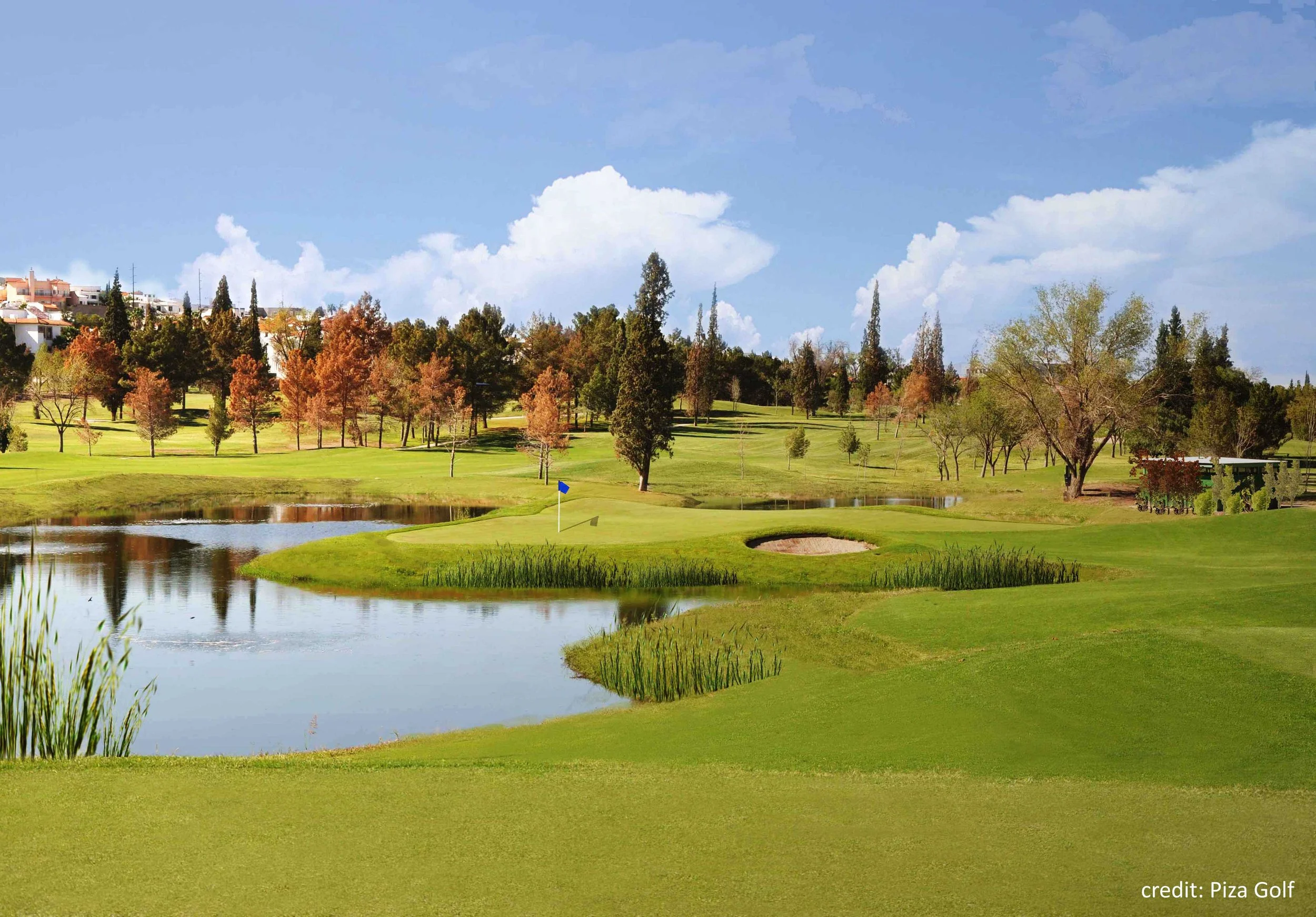
The Aesthetic Function of Man-Made Water Features
Finally, the last function of man-made water features that a golf course architect should consider are the aesthetics, which are the least tangible and, therefore, the most difficult to actually design. Aesthetic is defined by the Oxford Living Dictionary as, “Adj. – 1.1. Giving or designed to give pleasure through beauty.” (https://en.oxforddictionaries.com/definition/aesthetic)
The burgeoning field of Environmental Psychology seeks to study the relationship between people and their physical surroundings, to understand how and why the environment impacts people, and to use that knowledge to improve the relationship between people and the world around them (Ackerman).
Most relevant to the topic of this post, there are theories of Environmental Psychology (e.g., “The Ideal Environment for Humans”) that can help to explain why a designed environment (such as a golf course) might be pleasurable or distressing to the person experiencing it. With a better understanding of the basic tenets of Environmental Psychology, a golf course architect can better understand how to design a golf course (including water features) to evoke the desired psychological effect.
A more thorough exploration of this topic of this can be found here: https://golfclubatlas.com/in-my-opinion/enhancing-the-experience-of-golf-through-landscape-design-and-environmental-psychology-by-jamie-black/ (Black)
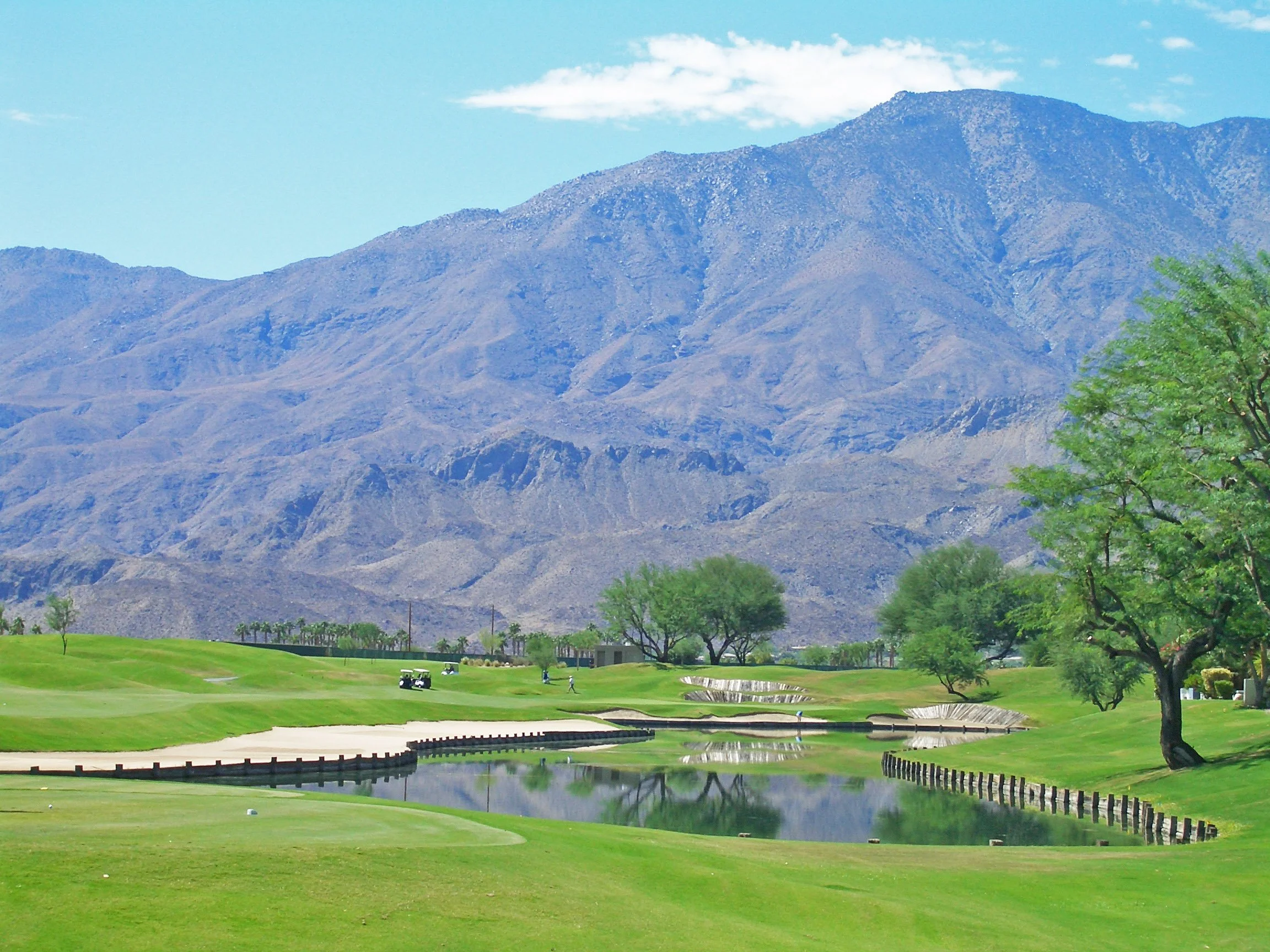
The way that light shimmers off the surface of the water, the images that are reflected, the colors that are amplified or distorted, even sounds and smells all play into the intangible perception of the beauty of an object (in this case, a lake at PGA West’s Stadium Course).
Cart Paths
Cart paths are another man-made feature often seen on golf courses. For many golf courses, golf carts, aka motorized buggies, are an irreplaceable source of revenue (especially in the United States). They also make the game accessible to golfers who are mobility-impaired. As such, as much as they may be disparaged by golf traditionalists, it is probably unreasonable to expect that golf carts can ever be fully eradicated from the modern game.
However, where there are golf carts, there is also often compaction and turf damage. Ground that is frequently wet and areas that are subject to a lot of concentrated golf cart and maintenance equipment traffic are particularly hard hit. All too often, the first proposed solution is to construct a network of concrete and/or asphalt cart paths and curbs. It’s important to consider, however, that cart paths and curbs can result in a large carbon footprint (materials sourcing and mixing, transport, and installation), can be an eyesore within an otherwise natural looking landscape, can have an impact on playability (when errant balls ricochet off the paths), and are an expensive line item to build and eventually replace.
One solution is to minimize the use of cart paths and curbs so that they’re only found in areas that will get the most concentrated traffic, e.g. near buildings, tees, and greens. Below is a graphic showing some design concepts to make these limited paths more effective:
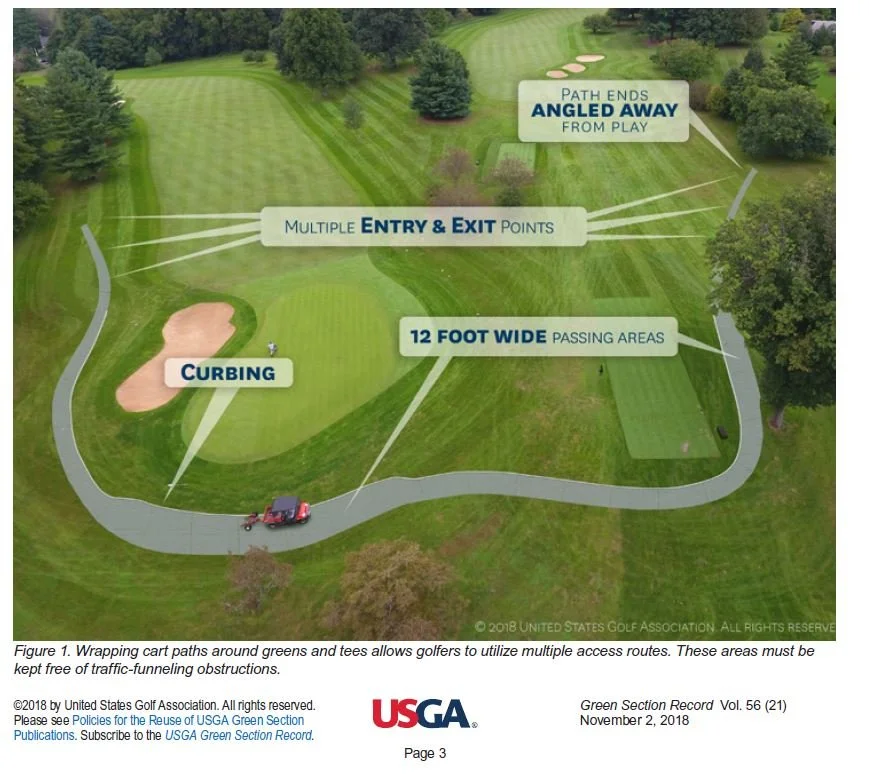
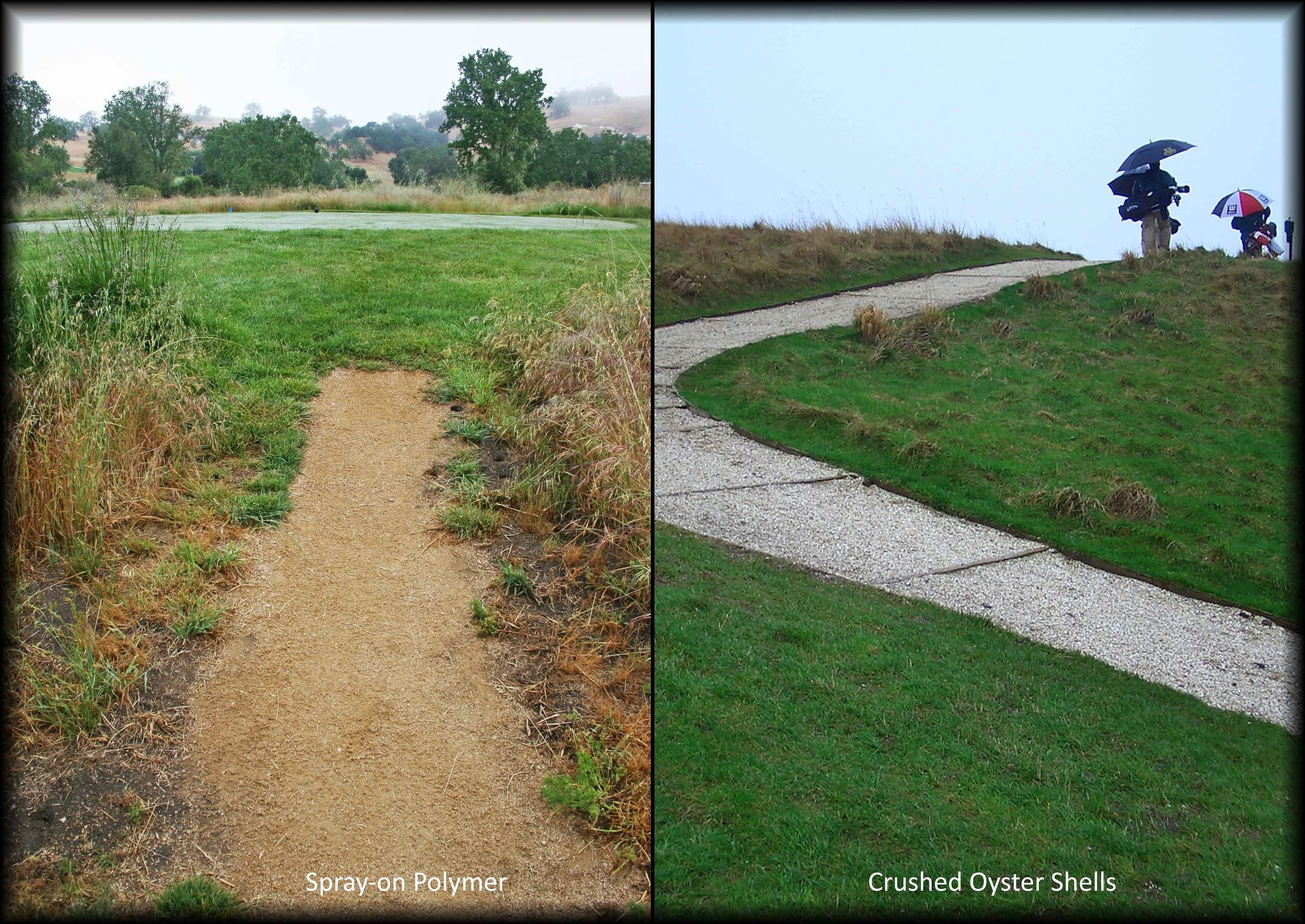
In the name of economic and ecological sustainability, more sustainable alternatives to concrete and asphalt cart paths should also be given consideration. Alternatives that are hearty enough for use in high-wear areas but that are porous and blend with the natural environment are the ideal. Recycled crumb rubber, various polymer sprays that harden soil, porous rubber matting, and even locally sourced oyster shells can all withstand foot traffic, if not a low level of golf cart traffic.
These “unstable material” paths have drawbacks versus the more stable concrete and asphalt paths, but golf course architects should be willing to test and propose various alternatives before automatically deciding that wall-to-wall concrete or asphalt cart path is the only solution.
Contact Sustain Golf for more information!
We firmly believe that common sense sustainable design, construction, and maintenance practices are the keys to the long-term outlook for the game of golf. We at Sustain Golf aspire to be on the leading edge of applying sustainability concepts to golf course design and construction.
We would be happy to answer any questions that you might have about sustainable golf course design, maintenance, and construction. Visit us at www.sustaingolf.com or contact us at the following email address for more information: matt@sustaingolf.com.
Up Next:
Step 15 – Topsoil Respreading and Seedbed Preparation
References:
Ackerman, Courtney E., MSc. What is Environmental Psychology? October 10, 2020 (retrieved from https://positivepsychology.com/environmental-psychology/)
Black, Jamie. Enhancing the Experience of Golf Through Landscape Design and Environmental Psychology (retrieved from https://golfclubatlas.com/in-my-opinion/enhancing-the-experience-of-golf-through-landscape-design-and-environmental-psychology-by-jamie-black/)
Golf Course Superintendents Association of America. (2023). Best Management Practices. Planning Guide & Template. GCSAA Foundation. https://www.gcsaa.org/docs/default-source/environment/bmp-planning-guide_2023_print_final.pdf
Hurdzan, Dr. Michael J. Golf Course Architecture: Design, Construction & Restoration. Chelsea, MI: Sleeping Bear Press, 1996.
Oats, David & Kammerer, Dr. Steven, Cart Paths and Traffic Management Go Hand in Hand, USGA Green Section Record, Vol. 56, November 2, 2018 (retrieved from file:///C:/Users/onesc/AppData/Local/Temp/oatis-kammerer-cart-11-2-18-1.pdf)
Richardson, Forrest L. & Fine, Mark K. Bunkers, Pits & Other Hazards. Hoboken, NJ: John Wiley & Sons, Inc., 2006
Souza, Dr. Stephen, President Clean Waters Consulting, LLC and Adjunct Professor at the Rutgers University Professional Golf Turf Management School
Photo Credits:
Dreamland Golf Club; Club Campestre de Chihuahua, Piza Golf; various golf courses, Matthew Schiffer
Peer Review:
Dr. Keith Duff, former UK government wildlife agency Chief Scientist, current Golf Environment Consultant
Edwin Roald, EIGCA, Golf Course Architect, Eureka Golf