
Key Points
With fine shaping, drainage, and irrigation system installation winding down, the shapers can be redeployed to begin the process of topsoil respreading (or sand capping).
The topsoil should be free of old turf, weeds, clumps, and rocks. Any soil amendments that are needed should be added before seeding or sprigging take place.
This is also a good time for the golf course builder to begin addressing small final details, including bringing valve boxes to the correct levels, tying in the edges of cart paths with their surrounds, and setting catch basin grates.
As fine shaping, drainage, and irrigation installation is approved and begins to wind down, shapers can be redeployed to begin respreading the topsoil that had been stockpiled during the clearing and grubbing phase (see Step 6: Environmental Planning Principles, Routing the Golf Course, Surveying, Site Preparation, and Clearing) or, if the project calls for it, capping the shaped subgrade with sand. Typically, topsoil or sand cap should be spread to a thickness of up to 6” (15 cm) on all fairways, tee slopes, green slopes, and mounds and feathered down to tie seamlessly into the undisturbed surrounds. For roughs, 4” (10 cm) is usually adequate. If any topsoil is to be imported from off-site, it should be consistent in structure with the native topsoil.
Preparation of the Seedbed
If the topsoil was stockpiled prior to bulk earthwork and has been sitting in place for weeks or months, native vegetation may have begun to grow on it. Desirable native plants or seeds can be harvested from the topsoil stockpile as an inexpensive source of plant stock for use in areas that are to be revegetated with native plants.
After any harvesting is finished, if the vegetation has grown to a height of more than 15” (40 cm), it should be mowed or cut down prior to moving the stockpiled topsoil.
The stockpiled topsoil is then moved by excavators or bulldozers into piles to help break up the remaining organic material. It can then be pushed by bulldozers or loaded into dump trucks and moved to wherever it is to be respread. Respreading will typically be done by a bulldozer with 6-way blade (for large areas) or an excavator with a tilt bucket around greens and in smaller areas. The machinery will vary based on the site conditions.
Once the topsoil has been respread, any old turf or weeds that remain need to be plowed under in preparation for planting. Weeds that remain will compete with newly planted seedlings or sprigs, so frequent plowing and rototilling (as frequently as once per week) are a good means of controlling the weeds until seeding or sprigging can take place.
If the consulting agronomist has determined through soil testing that soil amendments are required, they can be applied next. Amendments can be used to adjust the pH of the topsoil and to add necessary nutrients that are lacking. These amendments can be applied using large farm equipment and lightly mixed into the topsoil using a disc or a rotovator attachment.
Once the amendments have been worked in, final grading can take place. The goal of this process is to break up large dirt clods and ensure that all large rocks (greater than 2” (5 cm)), roots, and debris have been removed from the seedbed. Low spots (aka birdbaths) that hold water should also be filled in, leveled and smoothed at this point.
Final grading is often done by discing the soil, followed by a pass with a York rake, followed by a float, land leveler, box blade, or finishing rake. The equipment (some examples pictured below) that is used will depend on the site conditions. Wet or rocky sites will require different equipment than generally dry or sandy sites.
Golf features, such as tees, greens, bunkers, and small mounds, will be final graded by small equipment (e.g. Sand Pro) or hand labor so their features are not flattened or distorted.
The golf course builder can also begin addressing small final details at this time, including bringing valve boxes to the correct levels, tying in the edges of cart paths with the surrounding ground, and setting catch basin grates to their final levels.
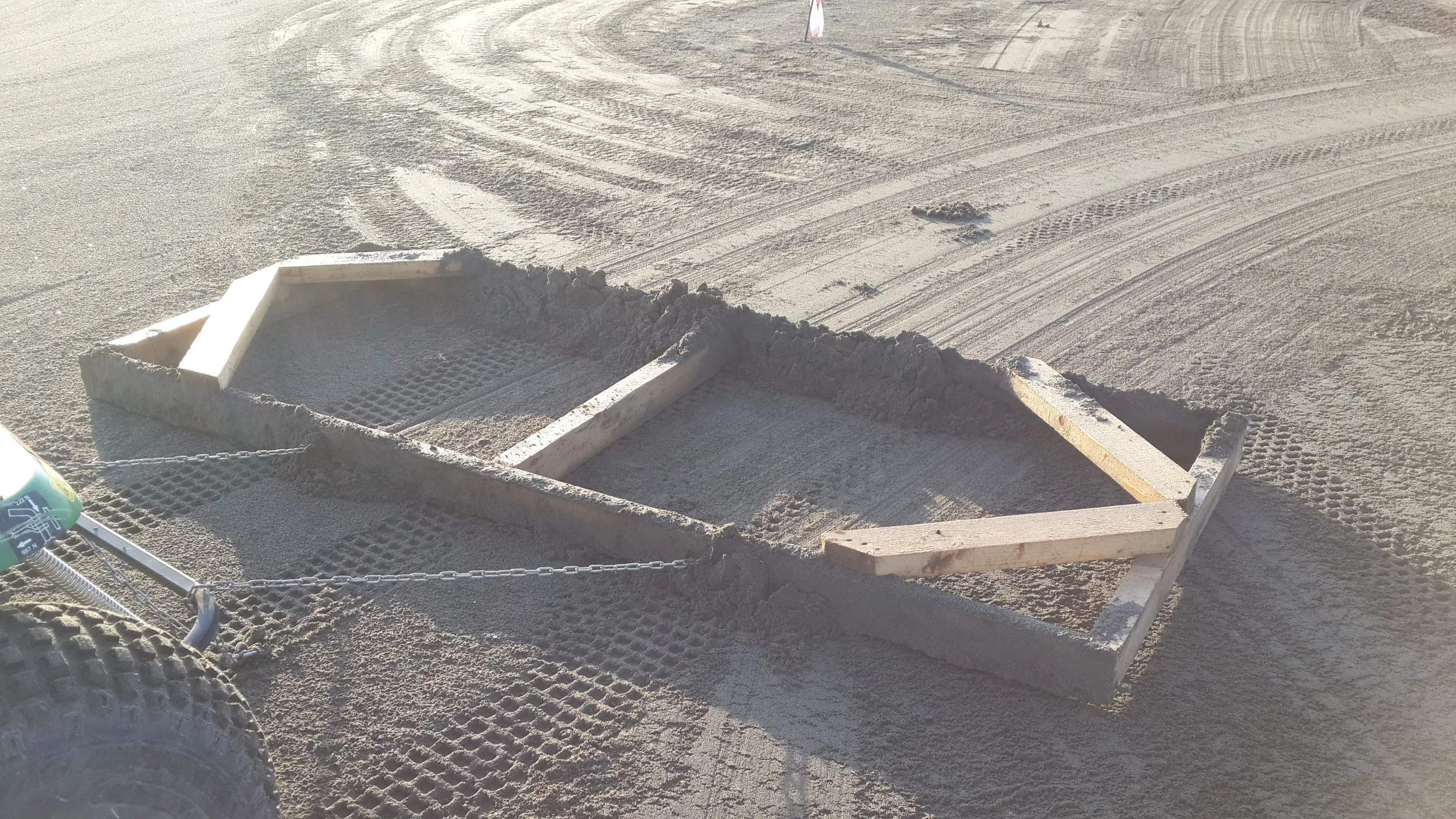
Float attachment for fine shaping and smoothing sand
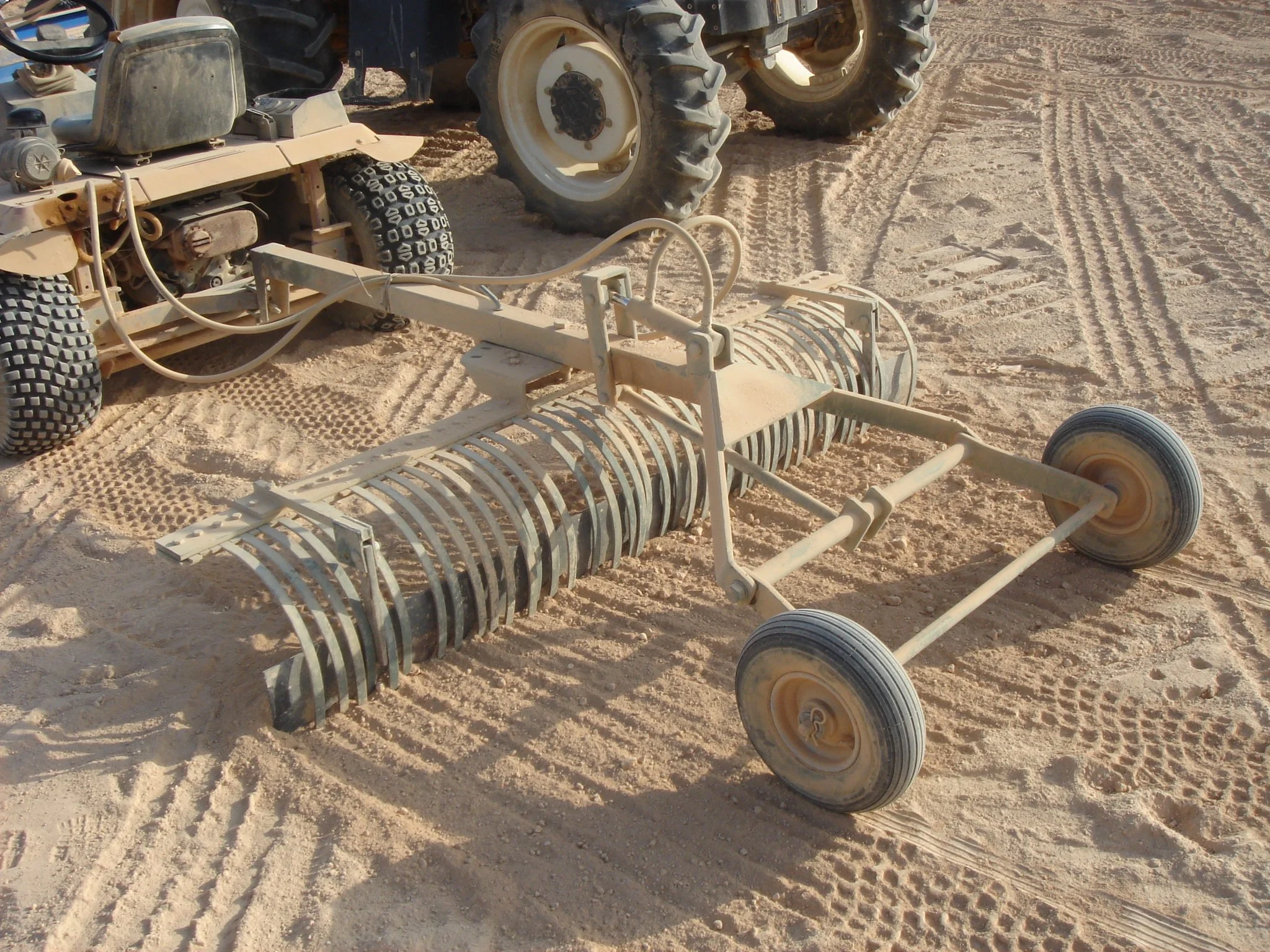
Rake board or York rake attachment for fine shaping or collecting small debris
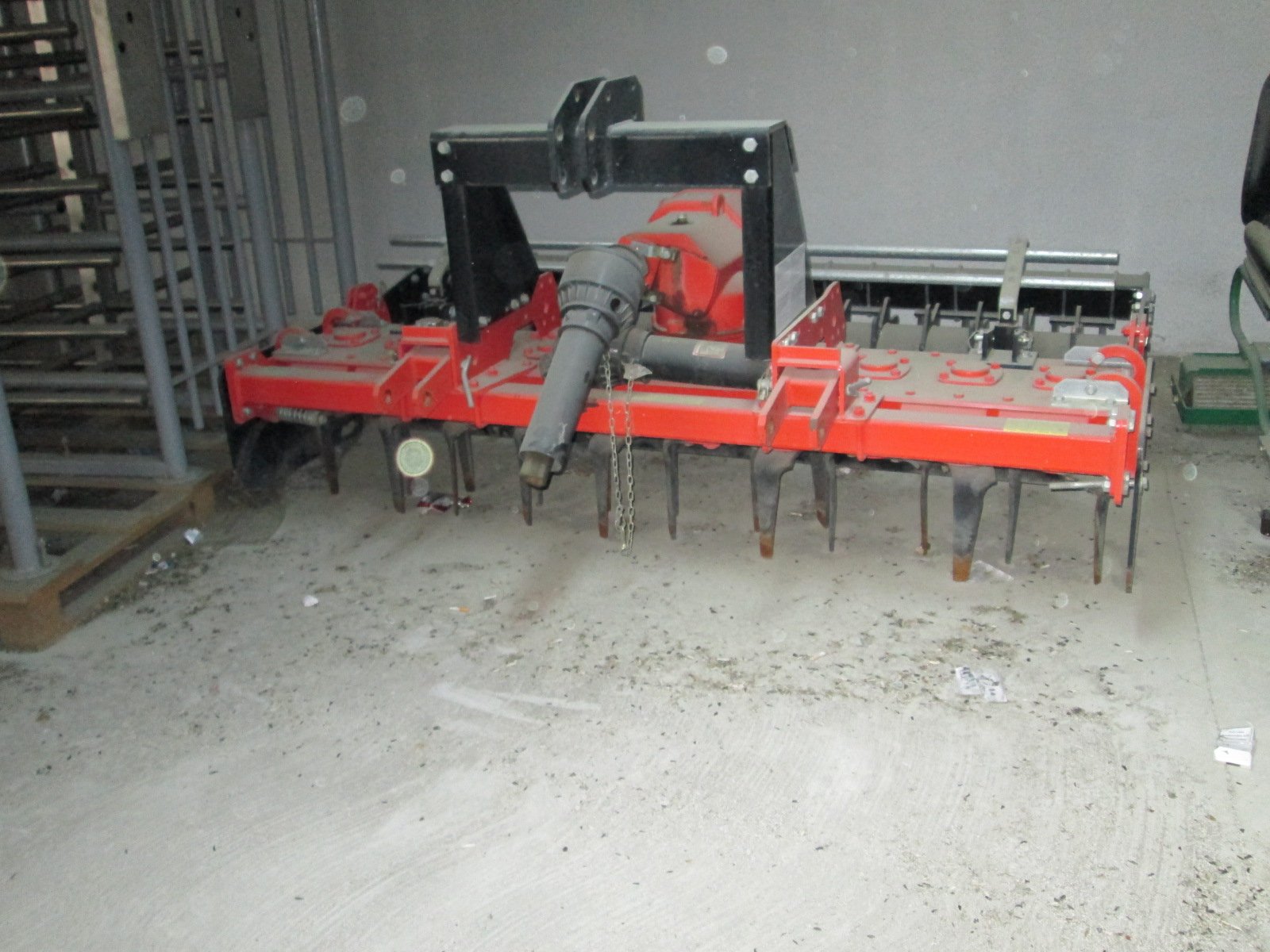
Rotovator attachment to break up and mix soil
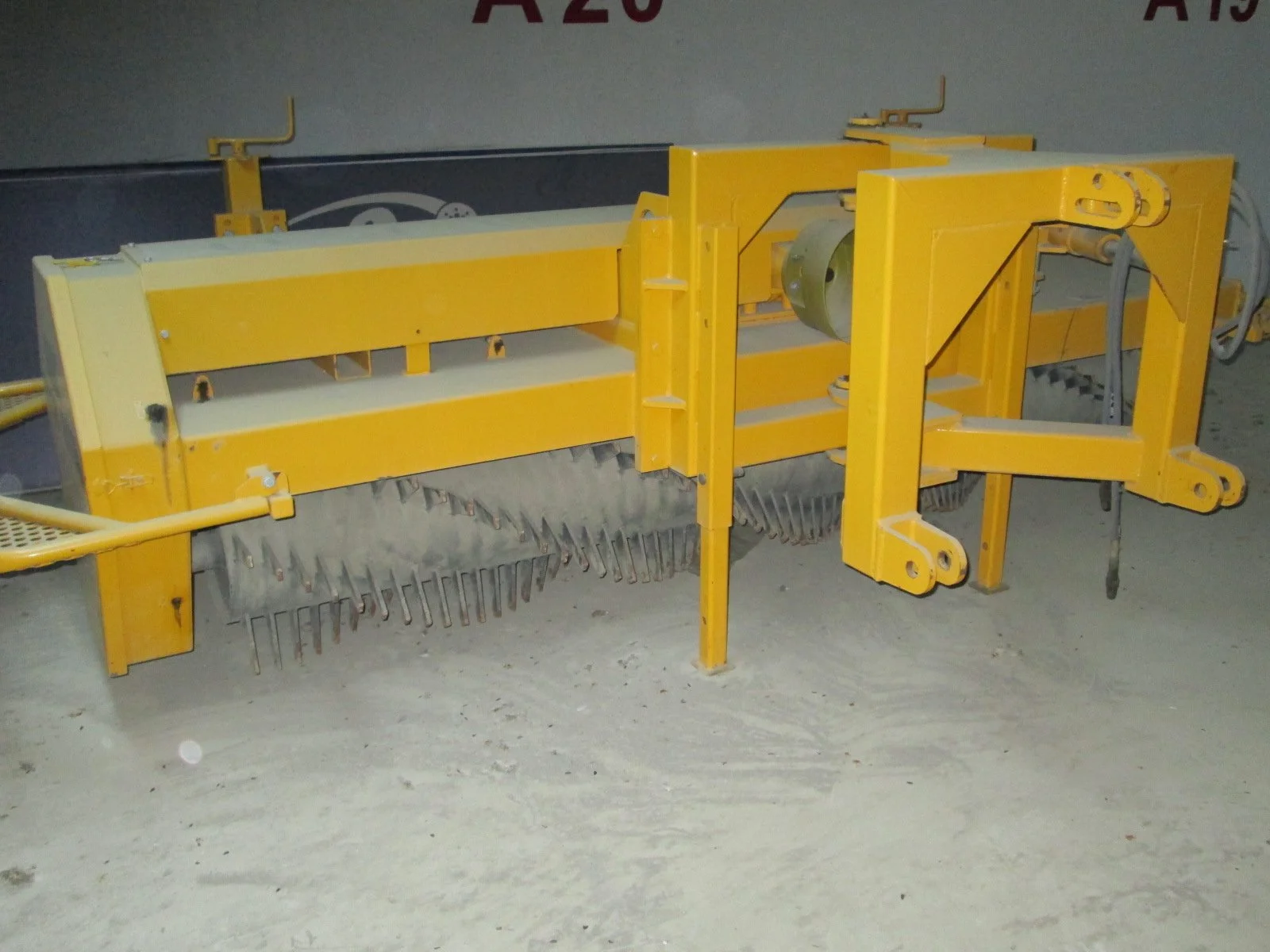
Stone burier attachment to bury small rocks
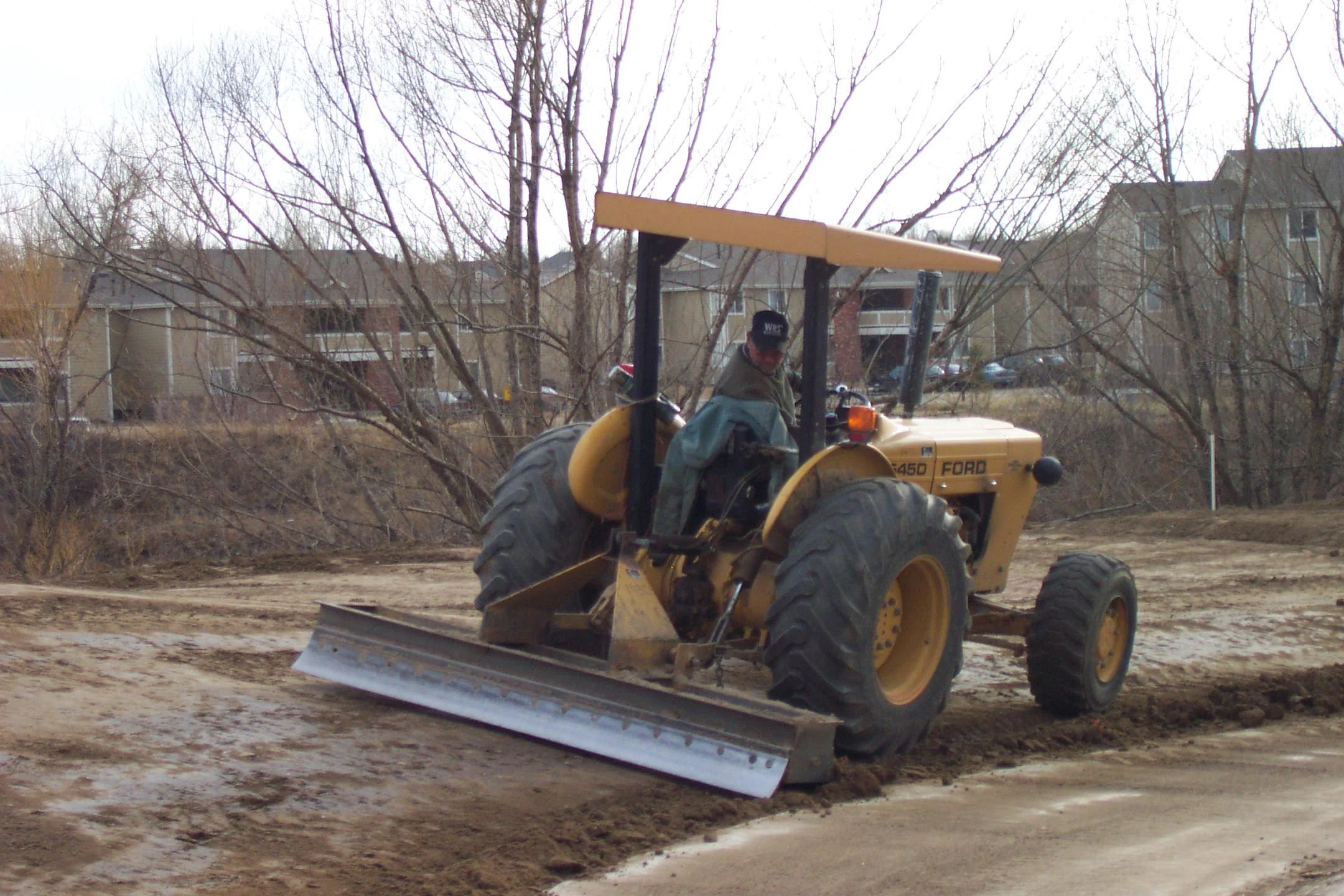
Box blade attachment for fine shaping and smoothing
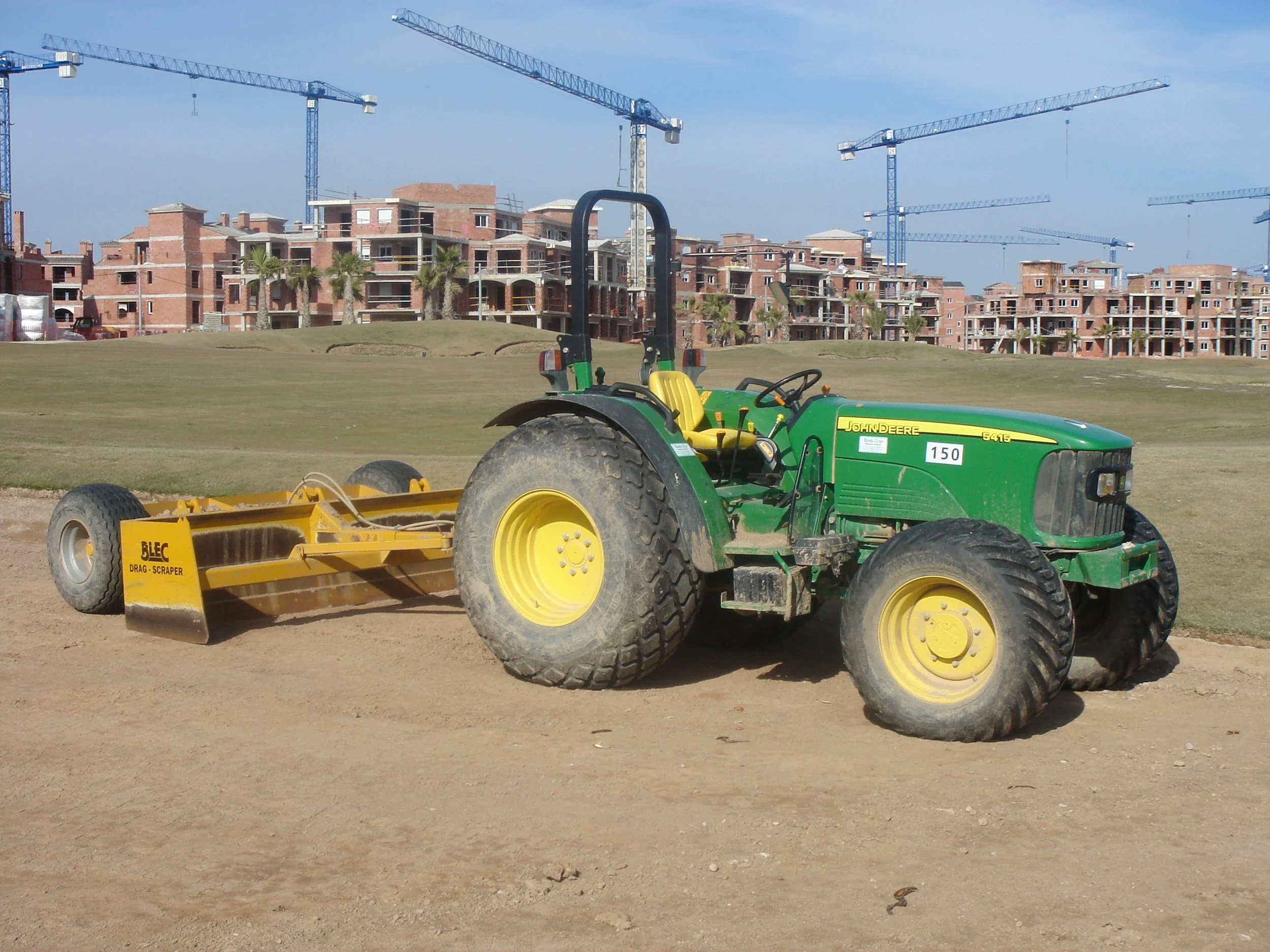
Box blade attachment for fine shaping and smoothing
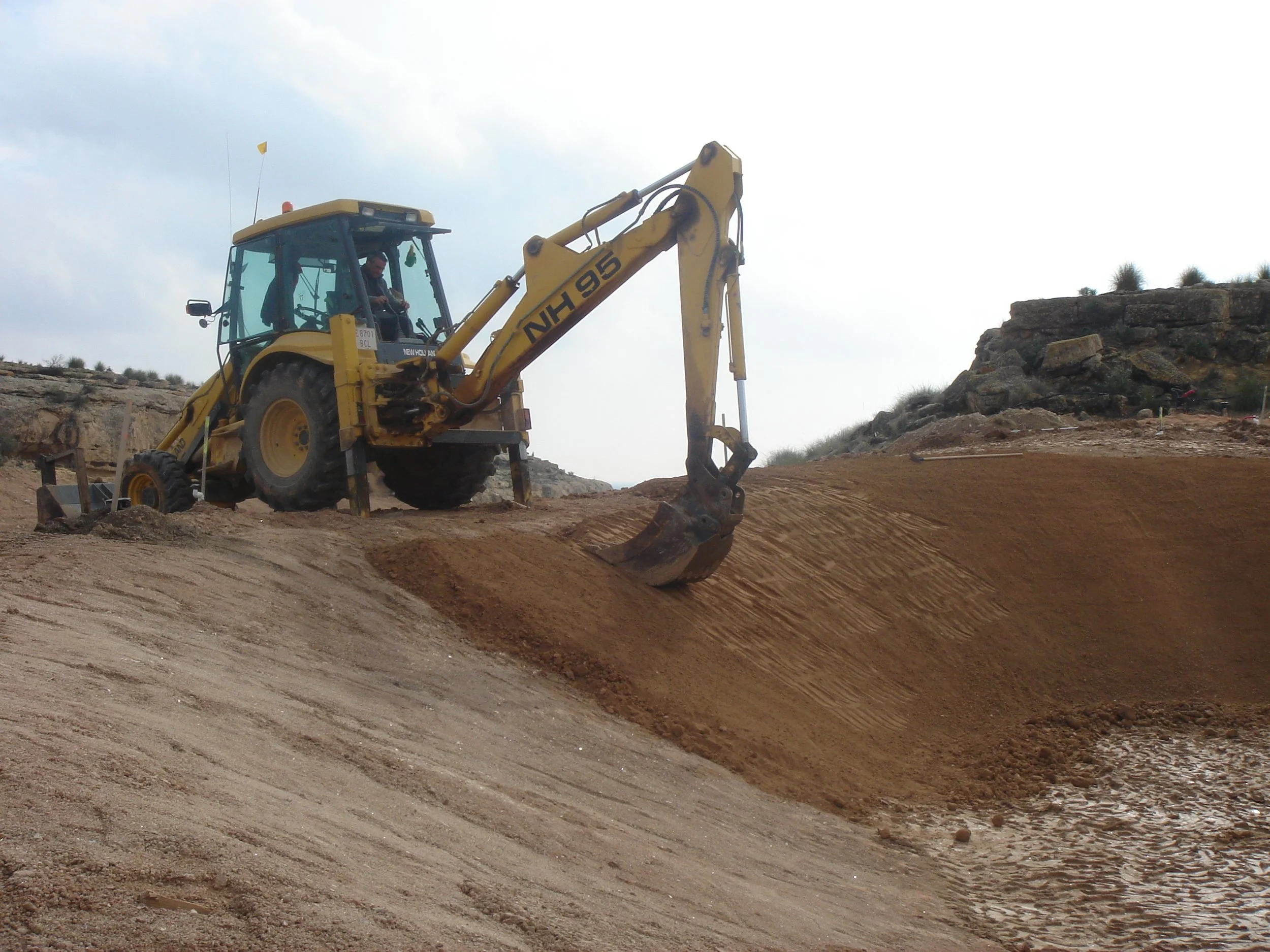
Topsoil respread with a backhoe
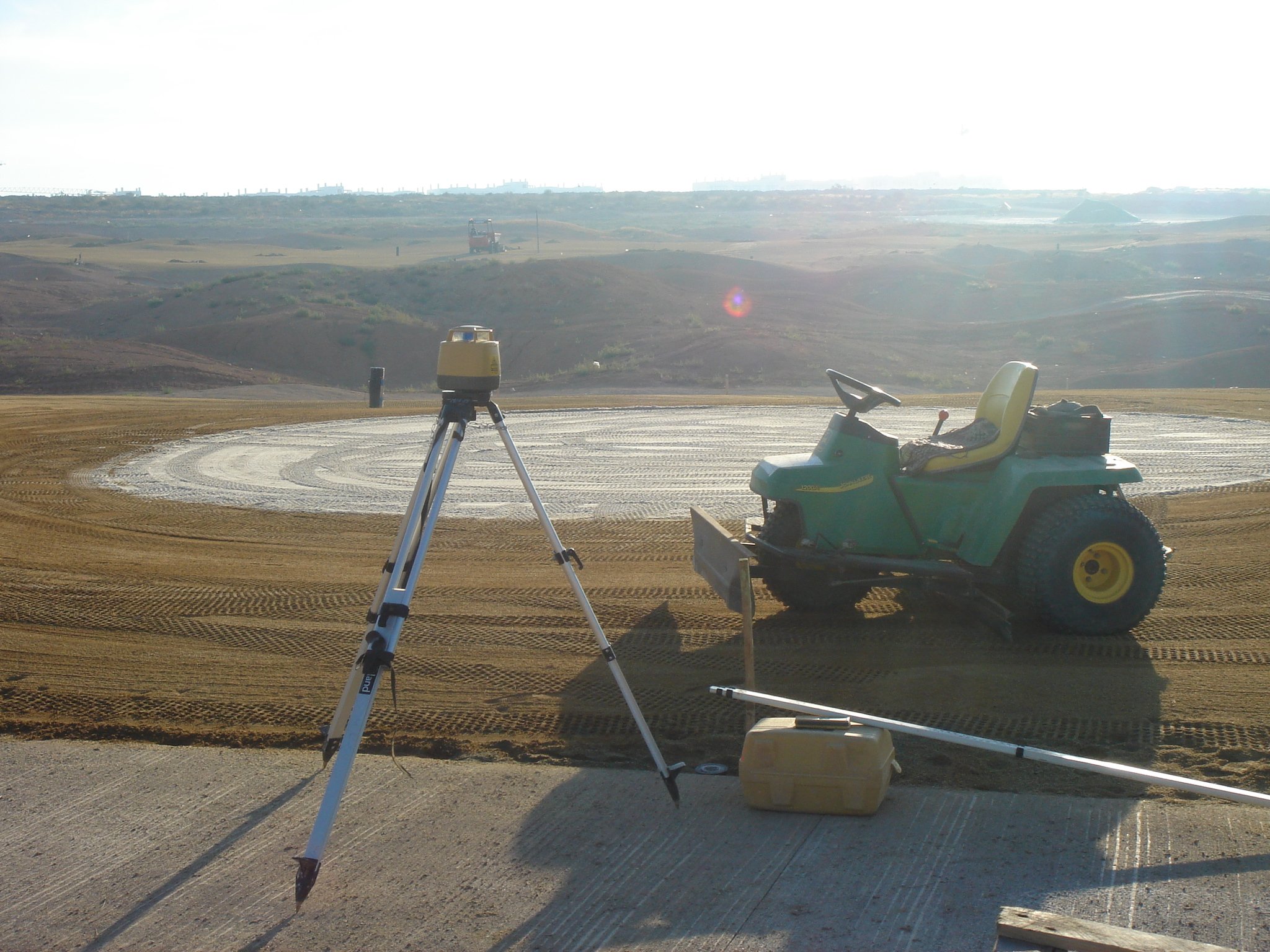
Sand Pro to finish grade golf features or small areas
Next Steps
When the golf course builder has finished final grading and preparation of the seedbed, the golf course architect must approve the final shaping, while also performing spot inspections to ensure that the topsoil (or sand cap) is spread to a uniform thickness, that all large rocks and debris have been removed, and that all areas are properly graded to ensure overland drainage (typically, at least 3% slope) to a catch basin or an out of play area. The compaction and moisture level of the seedbed should be as optimal as possible before planting takes place.
The golf course architect will also have the irrigation design consultant supervise a final performance test of the irrigation system to double check that each head is functioning properly and oriented correctly. Any malfunctions in the irrigation system will be very disruptive during grow-in, so it’s important to have confidence in the irrigation system prior to seeding or sprigging.
Contact Sustain Golf for more information!
We firmly believe that common sense sustainable design, construction, and maintenance practices are the keys to the long-term outlook for the game of golf. We at Sustain Golf aspire to be on the leading edge of applying sustainability concepts to golf course design and construction.
We would be happy to answer any questions that you might have about sustainable golf course design, maintenance, and construction. Visit us at www.sustaingolf.com or contact us at the following email address for more information: matt@sustaingolf.com.
Up Next:
Step 16: Turfgrass Selection – Cool vs. Warm Season. Sodding vs. Seeding vs. Sprigging
References:
Hurdzan, Dr. Michael J. Golf Course Architecture: Design, Construction & Restoration. Chelsea, MI: Sleeping Bear Press, 1996.
Photo Credits:
Cees van Nieuwenhuizen
Peer Review:
Dr. Keith Duff, former UK government wildlife agency Chief Scientist, current Golf Environment Consultant